How a GIC ladder works
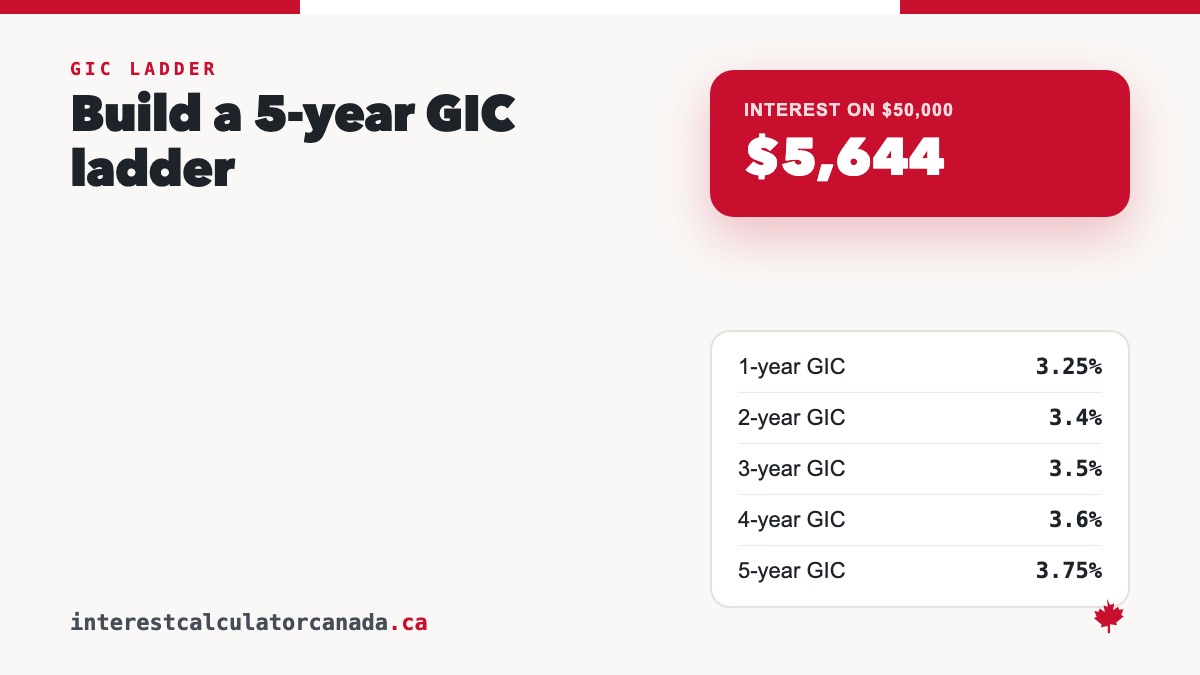
- Divide your savings into five equal parts.
- Buy a 1-, 2-, 3-, 4- and 5-year GIC with those parts.
- Each year one GIC matures. Reinvest it in a new 5-year GIC — or keep the cash if you need it.
- After four years every rung earns the 5-year rate, yet one GIC still matures every year.
A ladder gives you most of the higher long-term rate while keeping part of your money available each year, and it smooths out the risk of locking everything in just before rates rise.
Things to check before you buy
- Redeemable or non-redeemable. Non-redeemable GICs usually pay more but cannot be cashed early.
- Compound or annual payout. This calculator assumes interest compounds annually until maturity; GICs that pay out interest each year earn simple interest instead — see the simple interest calculator.
- Deposit insurance. Eligible GICs at CDIC member institutions are covered up to $100,000 per insured category, per institution. Spreading large amounts across institutions or categories (such as a TFSA and an RRSP) can keep more of it covered.
- Tax. Interest on a multi-year compounding GIC outside a registered plan must be reported every year as it accrues, not only at maturity — see tax on interest income.
Frequently asked questions
What is a GIC ladder?
A GIC ladder splits your savings across GICs with different terms, usually one to five years, so that one GIC matures every year while most of the money earns longer-term rates.
Can I build a GIC ladder in a TFSA?
Yes. GICs can be held in a TFSA, which makes the interest tax-free.
Do GICs compound?
Many multi-year GICs compound annually and pay everything at maturity. Others pay interest out each year, monthly or semi-annually. Check the terms of the GIC you buy.
Results are estimates based on the figures you enter and assume rates do not change. They are not financial advice.