Why a TFSA grows faster
Interest, dividends and capital gains earned inside a Tax-Free Savings Account are not taxed — not while they grow and not when you withdraw. In a regular (non-registered) account, interest is taxed every year at your full marginal rate, so part of each year’s growth is lost before it can compound.
The calculator runs the same contributions twice: once tax-free, and once with each year’s interest taxed at the marginal rate you enter.
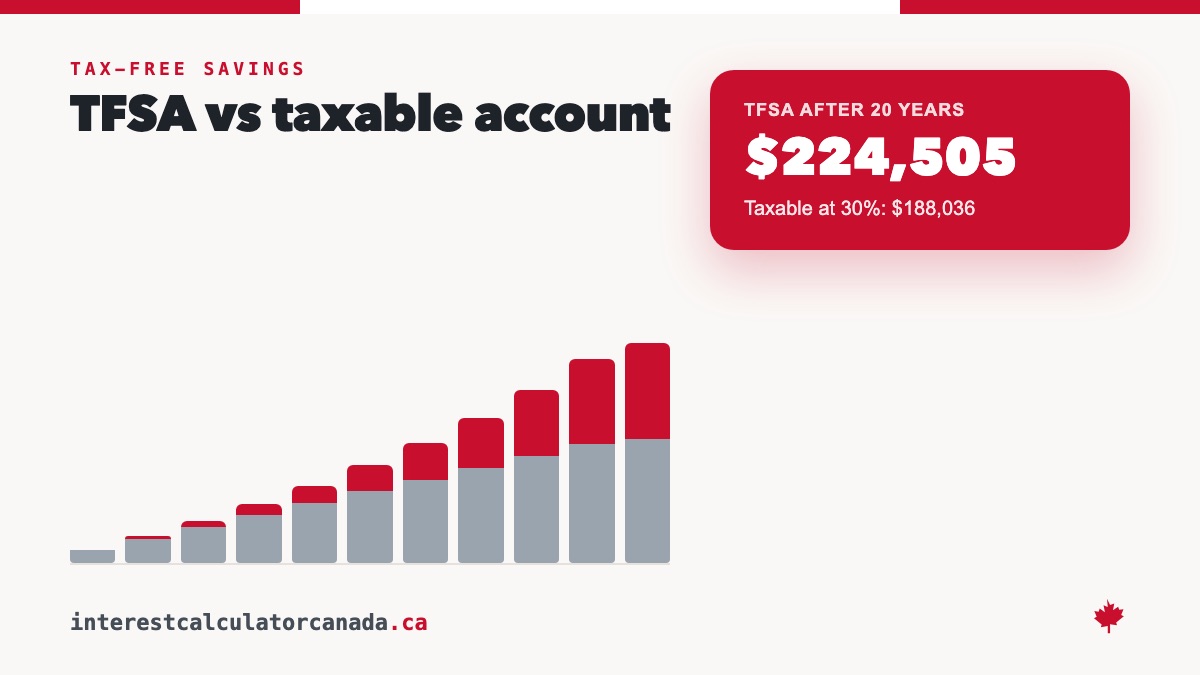
Example: $500 a month at 5%
| Time | TFSA | Taxable account (30% tax) | TFSA advantage |
|---|---|---|---|
| 10 years | $77,641 | $71,803 | $5,838 |
| 20 years | $205,517 | $173,886 | $31,630 |
| 30 years | $416,129 | $319,021 | $97,108 |
The gap widens over time because the tax you save keeps compounding too.
TFSA rules worth knowing
- Contribution room is set by the federal government each year and unused room carries forward. Your exact room is shown in your CRA My Account.
- Withdrawals are tax-free, and the amount you withdraw is added back to your room on January 1 of the following year.
- Over-contributing is costly: excess contributions are taxed at 1% per month until they are removed.
- What you hold matters. A TFSA can hold savings, GICs, bonds, ETFs and stocks. For interest-bearing savings, compare rates with the GIC vs HISA vs TFSA guide.
How interest is taxed outside a TFSA is explained in tax on interest income in Canada.
Frequently asked questions
Is TFSA interest taxable?
No. Interest and other investment income earned inside a TFSA is not taxed, and withdrawals are tax-free.
How much can I contribute to my TFSA?
It depends on your age, the years you have been eligible and your past contributions and withdrawals. Check the exact figure in CRA My Account before contributing.
What marginal tax rate should I enter?
Use the combined federal and provincial rate on your last dollar of income. It is only used for the taxable-account comparison.
Results are estimates based on the figures you enter and assume rates do not change. They are not financial advice.